
NOSTALGIA (Part One)
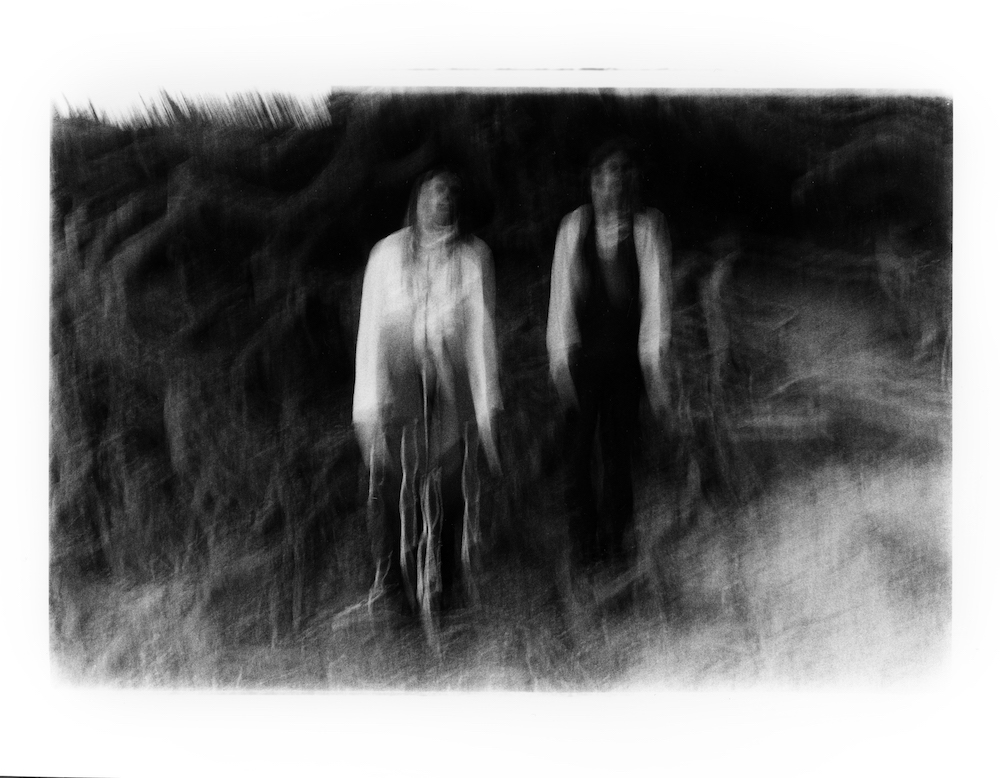
Nostalgia was originally ‘discovered’ as an often-debilitating condition by Johannes Hofer in 1688. (Hofer, 1934) He was a medical student and observed a depressed behaviour among Swiss Mercenaries working away from their homeland. He later observed the same malaise in young people who worked away from home, in domestic service. He named the longing and yearning they felt ‘nostalgia,’ from the Greek ‘nostos’ meaning ‘home’ (sometimes ‘homecoming’) and ‘algos’ meaning ‘pain. Hofer was aware that ‘gifted Helvetians have introduced not long since in their vernacular language, chosen from the grief for the lost dream of a native land, which they called das Heimweh…and hence since the Helvetians in Gaul (France) were often taken by this mood, among that same nation merited the name la maladie du pays.’
Before renaming the maladie nostalgia, it had become known as ‘The Swiss Illness,’ a mental condition that, in extreme cases, led to incarceration or, if in the army, execution. This would be either by firing squad or by being buried alive. Hofer suggested that ‘[a] patient must be returned to his native land… ‘as ‘[Nostalgia] admits no remedy other than a return to the homeland.’ (Hofer, 1934) However, the fear was that nostalgia would spread among the ranks and cause the unit to collapse. Nostalgia had to be stopped.
The ‘Algos’ part derives from Algea, the personification of grief and sorrow, but the pain aspect has now been overshadowed by a meaning of well-being when remembering past times.
Hofer found little to suggest a medical cause for Nostalgia, or at least little we as twenty first century citizens would consider medical cause and stated that ‘I consider the nearest [cause] to be the continuous vibration of animal spirits through those fibres of the middle brain in which compressed traces of ideas of the Fatherland still cling.’ (Hofer, 1934)
This is likely to be seen as quackery of the highest order in today’s world, as it was meant quite literally. Metaphorically, however, it does offer an insight into the idea of the ephemeral and indefinable past acting on the easily corruptible now.
The problem with nostalgia is that it fundamentally disrupts the forward momentum of one’s life, of Time’s Arrow. In constantly harking back to the past, one’s personal future remains unwritten, or at least not noticed as it passes. It reinforces the past but makes any future less of its own time.
Algos represents the pain and impossibility of a ‘normal’ future. For me it represents the agony of constantly being under the yoke of agoraphobia.
ii
Although one can see that the present is the sum of all past events, the refusal, or inability, to engage with the present puts an irreconcilable stop on new experiences. The future becomes a wasteland, and one is left reminiscing about reminiscing. Life becomes a Moebius strip with the path continually turning back on itself and Time’s Arrow losing its way. If, as Eddington says, ‘all systems tend towards entropy,’ (Eddington, 2012) a closed system of ‘reminiscing about reminiscing’ concentrates and accelerates that iniquitous forward motion.
Feelings of nostalgia are often triggered after dark or upsetting events have occurred, either personal or societal. It is often used as a method of resetting one’s outlook. It can function as a protector, counsellor, and coach. Remembering that something good has happened reinforces that good can happen. Nostalgia is often, therefore, a link to happier, more carefree times. It is a fundamentally passive experience that allows the psyche to fix the problems of the modern present with the cherished past. A resetting of the psyche. Grafton Tanner further comments that ‘nostalgia is an unavoidable reaction to the traumas of the modern world. We do not need a reality check to awaken us from the emotion; what we need is a liveable world, one that supports real people when crises happen and does not exacerbate them through selfishness, greed, and the thirst for power. Over the next century, plenty of people are going to experience loss – loss of loved ones, their home, their way of life – and they are going to feel nostalgia too.’ (Tanner, 2021)
Hofer ends his dissertation with a poem, quoting Cicero: ‘Truly spoke Cicero, the Roman orator/That nothing can be compared to a love of home. ‘
‘Home’ in the 21st Century, though, is a nebulous concept and in a long process of transformation. This shift of meaning has led to nostalgia taking on a surprising new form. Rather than homesickness, nostalgia has taken on the mantle of ‘home comforts,’ and remembrance of such. It is possible that this change correlates to an increase in social movement. As travel and moving town for work become more commonplace, if not ubiquitous, the idea of what is recognised as ‘home’ has changed.
Jain, in ‘Psychology and Philosophy of Home,’ (Jain, 2023) notes that ‘home is not just a physical place, but a psychological and emotional state, a feeling of connexion and belonging to something larger than ourselves.’ This comment suggests that the physical concept of home is not the most important aspect of ‘home’ but works in tandem with other concepts, he goes on to clarify: ‘home suggests a deeper attachment to nearby environment… a combining of the spatial, time, and material elements into a strong knowledge of being. With this new perspective, home becomes less about the physical and geographical presence one remembers and more about the things that inhabited it and even the idea of things that inhabited it.
What intrigues me about Jain’s essay is the suggestion that ‘home’ is transportable. Not so much in terms of travellers, Romani, nomads and so on in which the entire physicality of their home is moved but in found spaces, space where one can nurture oneself, the cave in ‘Treasure,’ and the tree in ‘I Got The Arthur Blakey Blues’ for example. These were ‘my’ spaces. My home from ‘home.’
Jain also says that where once a ‘home’ was a place the occupants designed and physically built, subject to individual need and whim, modern housing, designed by architects, fundamentally depersonalises the living arrangement by creating not a home, but a ‘machine for living in’ in the words of Corbusier. This idea feeds directly into Debord and psychogeography with its loathing of the ordered and purpose-built. This is not a universally accepted idea, as Jain points out, quoting Bryce Stoneham, ‘architecture can concretise the psychological needs of the occupant and thus render a house a home’ but also noting that Pallasmaa states ‘[designing buildings is] an architectural manifestation of space, structure, order and is unable to touch upon the more subtle, emotional, diffuse aspects of the home.’
‘Home’ is also intrinsically connected to an understanding of self, of personal identity, as witnessed in the decoration and adornment of one’s personal space. Presumably, living in an endless parade of homes disrupts that sense of permanence and self.
In ‘On Grief and Reason’ (Brodsky, 2011) Brodsky says that ‘the more one travels, the more complex one’s sense of nostalgia becomes’ and for my own part, I tend to agree. I will admit to being mired by nostalgia, often making a virtue of it. I continually watch and rewatch movies and tv shows, I constantly revisit places of importance that have little real-world bearing now.
If, as I suggested earlier, nostalgia is born on the transition between youth and adulthood, this would make sense as my pre- and post-puberty theatre was one of constantly moving around the country, trying to establish peer group, community and continuity and, unsurprisingly, given the circumstances, failing.
The multiple futures I envisaged all failed to come to pass.
Recent Comments
 | crabmansmith on Love Death and the Crucial Thr… |
 | Will on Love Death and the Crucial Thr… |
| crabmansmith on Love Death and the Crucial Thr… |
 | Mark S on Is this thing on? |
| Will on Guya – Page 10 |
 Will Vigar
Recent Comments