Haunted Time – Haunted Space – Explorations of Hauntology, Agoraphobia and Time’s Arrow (Part One)
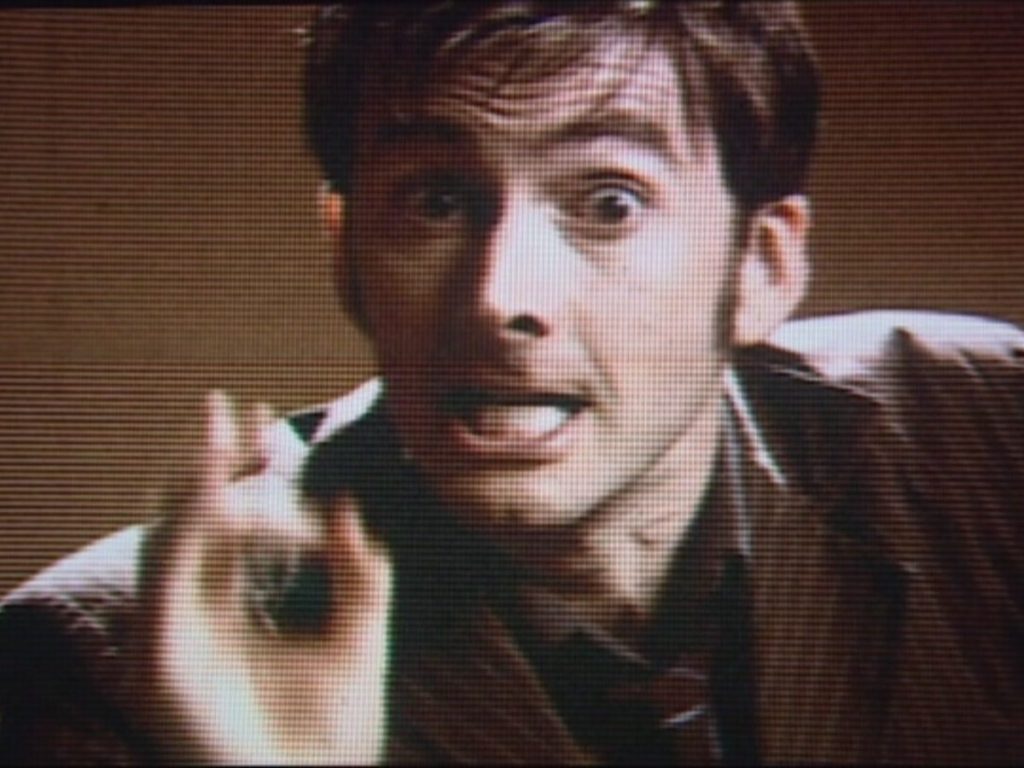
“People assume that time is a strict progression from cause to effect, but actually, from a non-linear, non-subjective viewpoint, it’s more like a big ball of wibbly-wobbly, timey-wimey… stuff…
Doctor Who: ‘Blink’
I
As you may have guessed from the heading, I suffer from agoraphobia. I’m supposed to say ‘I am living with agoraphobia’ in that positive affirmation kind of way, but frankly that makes it sounds like we have some sort of peaceful co-existence.
We don’t.
Agoraphobia has divorced me from reality, like a coercive, gaslighting partner. It has refused to let me go, knocked out my self-esteem and each time I think I’ve escaped its clutches, it hauls me back, kicking and screaming.
We are at war.
The term ‘agoraphobia’ is derived from the Latin ‘agora’ meaning marketplace, an assembly or a place of assembly, and the Greek god of fear and flight, Phobos, son or Ares. It is often defined as ‘a fear of open spaces,’ but this translation is, in practical terms, woefully inadequate. It isn’t usually ‘out there’ that is the problem, more often than not, it is the people, the crowds, the breaking of thresholds. The limited parameters suggested within the name fail to acknowledge the enormous varieties of anxieties or manifestations that the term embraces. To be agoraphobic, put simply, is to be imprisoned in space, time and mind.
‘The impossibility of walking through streets or squares resulting in anxiety or dread’ was first identified by the German psychologist Carl Otto Westphal in 1871. He suggested that agoraphobia was typified by suffering ‘anticipatory anxiety and a fear of sudden incapacitation.’ (Westphal, 1998)
Other names were suggested, all as inadequate as one another: Locomotor anxiety, topophobia, non-specific insecurity and my personal favourite, ‘Platz Angst,’ a direct translation of agoraphobia into German. It has an almost brutal, no-nonsense aesthetic that expresses the harshness of the condition well.
Westphal may have legitimised and codified agoraphobia, but it is widely believed that Hippocrates was the first person to cure someone with the ailment. The description of the King of Macedonia in Epidemics VV LXXXII (Hippocrates, 2015) intimates that ‘through bashfulness, suspicion and timorousness, (he) will not be seen abroad, loves darkness as life and cannot endure light, nor sit in the light… he cannot be seen by his goodwill and dare not come in company for fear he should be misused, disgraced, overshoot himself in gesture or speech or be sick.’ This holds many resonances with the modern agoraphobic experience. Alas, what the cure was and how it worked has been lost.
Isaac Marks suggests that from statistical, clinical and anecdotal evidence, agoraphobia can be considered to be ‘a coherent clinical syndrome with a well-defined cluster of features that carry on for long periods.’ (Marks, 1987) Indicating that within the chaos brought by agoraphobia, there is an often-unreached search for reordering one’s life; to divest oneself from the chaos brought by the condition.
This divesting can often take the form of depersonalisation, a cutting off from one’s feelings in order to minimise that feeling of being overwhelmed. My depersonalisation ‘strategy’ is to snap into a fugue state where my ego and super ego hide, and my id is given free reign. I rarely remember the contents of these moments of fugue and mercifully, they are mostly benign in aspect.
Hallam believes that agoraphobia should not be classed as a separate phobia at all. He goes on to suggest that it is a variable but inevitable feature of anxiety neuroses. (Hallam R. S., 1978`)
Not being a psychiatrist or a psychologist, I cannot give a clinical appraisal of these claims, but my personal experience would suggest that both options are not too far from the truth, with the former holding slightly more resonance for me. The difference appears to be a question of ‘am I agoraphobic because of a number of phobias and neuroses acting in tandem,’ or ‘I have several neuroses and phobias caused by agoraphobia.’ Either way, Times Arrow is severely tested by the arresting of spacio-temporal movement.
II
Time, and the way it passes differently for each person, fascinates me. Although always a point of fascination, it has become more pressing in recent years as agoraphobia has taken hold of me and drawn my days into interminable length. Being besotted with the motion of time is probably one of the reasons my obsession with Doctor Who has not diminished over the years, but fantasies of peculiar men in magic boxes is not the beginning or the end of the story.
This writing is hauntologically based and does not seek definitives – when dealing with hauntology, definitives are laughably scarce – rather, it aims to illustrate its concepts through creative explorations, personal recollections, flights of fancy. Some of these are already on this blog.
Time’s Arrow is the idea that draws these ideas together in their fractured nature. Whether they will remain adhered or dissipate with the inevitable addition of new information, new perspectives, to be seen. Everything is mutable, even the staid and solid Arrow of Time.
III
Academic research into agoraphobia is, according to Paul Douglas Carter in Repressed Spaces, (Carter, 2002) severely lacking. Although there is a lot of it, the majority merely repeats the same information, offering little to forward understanding of the condition. Comprehension of the syndrome, therefore, is no better understood than when the term was first introduced. He also claims that the most movement in the understanding of agoraphobia comes from the creative mind, rather than the scientific, logical viewpoint and with evident annoyance, declares that there is too little of that.
Ruth Hurst Vose (Hurst-Vose, 1988) agrees and notes that very few first-person accounts exist, largely because of the embarrassment felt at admitting to the condition. She cites several early books that are credited to anonymised names ‘David,’ ‘Mrs F-H’ ‘Professor,’ and so on and even in her survey, names are to make the book seem impersonal and distant with the condition of agoraphobia experienced as something shameful. This coldness, though, is offset by the authors personal recollections and reactions to them, but she makes a valid point that this is a condition that is under-represented and ill-understood.
It is important to understand that agoraphobia can cause a complete disintegration of self, and processing one’s past in this way is akin to recovering from amnesia, a temporal amnesia. It is interesting to note how much ‘self’ is confirmed by the passage and navigation of time. However, when one is divorced from the present and the path of Times Arrow, the past creeps up on you and effectively becomes the present. Potential futures are lost. Times Arrow becomes a negative feedback loop that destroys any concept of forward motion.
In order to begin the process of reintegration into the wider world, to losing oneself in it, and move forward, I had to rediscover ‘self.’
Moving Time’s Arrow away from this destructive loop, processing the past becomes an imperative.
IV
Agoraphobia writes its own rules for each person, and often these rules can be rewritten with no notice and are often contradictory. Except for the most basic symptoms – panic attacks, inability to leave the home – each sufferer’s experiences – and rules – will differ in a multitude of ways. None of the wealth of documented additional symptoms has any rationality to them, and many appear not to come under the auspices of ‘fear of the marketplace.’ Agoraphobia is a much more complicated condition than the wholly incorrect definition of ‘fear of open spaces’ can accommodate.
Some of my rules are quite common among sufferers, for example I insist on sitting with my back to the wall when dining out or going to the pub. It is imperative that I can see an exit. Visiting new places is problematic as you cannot be sure of where the exits are – other people’s houses are a particular problem and people visiting me will cause tremors and panic as my house – my safe space – suddenly manifests as ‘public space.’ In the early stages of my incapacitation, I received many guests which, although welcomed, perhaps contributed to the feeling of safety draining away Fearing that the boundaries between the inside and outside worlds would be irretrievably broken down, thus leaving me with no safe space to retreat to, I found more and more excuses to curtail the once welcome visits that kept me in touch with the world.
One rule that has caused untold consternation has been my inability to feel comfortable outside of the house after midday. If I need and am able to go out on my own, I must be back by 12:00. The earth has never caved in on those occasions I have made it home late, but the rule, and the panic, still apply.
One of the more frustrating aspects of agoraphobia is the ‘phasic panic attack.’ That is, the crippling panic and fear that manifests at a predictable threat. In times of stress, phasic attacks can undo previously successful rehabilitation. They operate as a negative feedback loop, often leading to a complete relapse as one becomes fearful of the onset of fear. Hurst Vose states that having suffered from the terrors of agoraphobia, the victim becomes acutely aware of the mechanisms that cause the attacks.
This is often a recursive nightmare as unchecked, agoraphobia can become phobophobia via the fear of agoraphobia. As tangled the phobias have become, the sufferer, according to Hurst Vose maintains a sense of the ridiculousness throughout, fully understanding the absurdity of the situation but at the same time unable to free themself from its binding.
Adam Phillips (Phillips, 1993) suggests that disconnect between the rational thought and the irrational action is almost as if the sufferer has been subject to ‘possession,’ and notes an almost catastrophic imbalance between the mundanity of the cause (stepping outside) and the visceral intensity of the response. ‘An experience without the mobility of perspectives. A phobia, like virtually nothing else, shows the capacity of the body to be gripped by occult meaning; it is like a state of somatic conviction.’
Freud, meanwhile, suggests that agoraphobia is ‘a proliferating defence system’ and compares it to ‘frontier fortification.’ (Freud, The Interpretation of Dreams, 1976) He declares that the dangers imagined by the agoraphobic are ‘tiny.’ I would agree that the dangers I shy from are inconsequential, but being an irrational fear, this is hardly the point. He notes that phobias are immense in their power to engender avoidance and simultaneously utterly trivial. The gulf between these two states is immeasurable, unnavigable. With Westphal’s idea of a fear of boundaries being at the root of agoraphobia, a seemingly infinite boundary would cause an existential meltdown. Awareness of this disconnect lends credence to Hurst Vose’s ‘absurdity’ claims.
Legrand de Salle suggests (quoted in (Mathews, 1981)) that more than a fear of the marketplace, agoraphobia can be seen as a fear of thresholds; fear of the boundaries that mark change. From inside to outside, from walking to taking a bus, from a state of inertia to a state of doing. He then cites the terror of sitting in an upstairs window and looking out at a limitless vista. Westphal posits that feelings of agoraphobia are at their most intense when there is no distinct boundary to the field of vision. I would take issue with this on a personal level as a limitless vista, away from boundaries is where I am happiest – looking out to sea, being lost on the moors or in a forest. The situations themselves do not fill me with fear, but the state between ‘here’ and ‘there’ is terrifying.
Preoccupied, as I am, by the study of those situations that might be called liminal and finding myself in a situation where thresholds become problematic, offers an interesting frisson.
Those who experience agoraphobia may feel as though they are trapped in their bodies, with the shell of their home acting as the outside wall of the prison yard, and unable to participate in the world around them as fully as they would wish. This can lead to feelings of isolation, meaninglessness, and a sense of being cut off from the riches offered by living and engaging with the world outside. In this respect, agoraphobia can be seen as an existential crisis forcing the sufferers to confront their mortality and vulnerability.
The fear of being in situations where one may not be able to escape or get help can be seen as a fear of death and can bring up questions about the meaning of life and the inevitability of one’s own mortality. Agoraphobia falls within the remit of the ‘existential crisis’ because it involves a fundamental fear and anxiety about the nature of existence and one’s place within the world. It can be a challenging and complex condition to live with and often requires therapy and other forms of treatment to manage.
Relearning the mechanics of time is only half of the recovery. Relearning space is another. With space being as constricted as time, the outside world became alien as familiarity waned. So much of self is defined by one’s home, that during the Agoraphobic lockdown the world outside came to feel like another planet. The irony here, of course, is that for my entire childhood and adolescence, this is exactly what I wanted, as the upcoming ‘Lunar Module’ post shows.
The reality of having your home planet become alien is unnerving. Having retreated from one unfathomable world to a place of safety, re-emerging (without the space suits, oxygen tanks and laser pistols necessitated by my childhood dreams of alien worlds) seems at times an insurmountable task.
V
Jacques Derrida’s description of hauntology has taken on a life far beyond his description and intended meaning. In his book, ‘The Spectres of Marx,’ (Derrida, The Spectres of Marx: The State of the the Debt, the Work of Mourning and the New International., 2006) Derrida introduces the concept as ‘a return or persistence of elements from the past, as in the manner of a ghost.’ Although his usage specifically refers to Marx ‘haunting Western society from beyond the grave,’ the term has become a buzzword for post-postmodern academia.
Hauntology, with the phrase ‘in the manner of a ghost,’ is frustratingly vague. It has come to mean an object, time or media expression rooted in memory and lost potential. As such, it is a supremely melancholic endeavour and well suited to post-millennial disenfranchisement.
It also presents the future as something to aspire to but ultimately be disappointed with. Berardi defined this aspect as ‘a failure of the future,’ (Berardi, After the Future, 2011) a concept that will be discussed and illustrated in later sections. Mark Fisher made much of this comment, writing extensively about it in ‘Ghosts of My Life‘ (Fisher, Ghost of My Life: Writings on Depression, Hauntology and Lost Futures, 2014) ‘Failure,’ of course, is arelative term and open to a multitude of interpretations.
Hauntology is both threat and comfort, joy and sadness. Where psychogeography’s prime concern was with the urban sprawl, hauntology is more ephemeral and, in many ways, internal. This ephemerality is what makes hauntology so appealing, as it is an entirely perceptual concept.
Recent Comments
 | crabmansmith on Love Death and the Crucial Thr… |
 | Will on Love Death and the Crucial Thr… |
| crabmansmith on Love Death and the Crucial Thr… |
 | Mark S on Is this thing on? |
| Will on Guya – Page 10 |
 Will Vigar
Recent Comments